
Yarn to carton, under one roof.
Seven stages, 12 production lines and 308 machines across the facility — 154 of them in the sewing section.
Seven-Stage Production Chain — Precision Industrial Flow.
From raw combed yarn to sealed cartons, our continuous manufacturing flow eliminates transit bottlenecks, protects fabric tension, and enforces strict inline verification at every workstation.
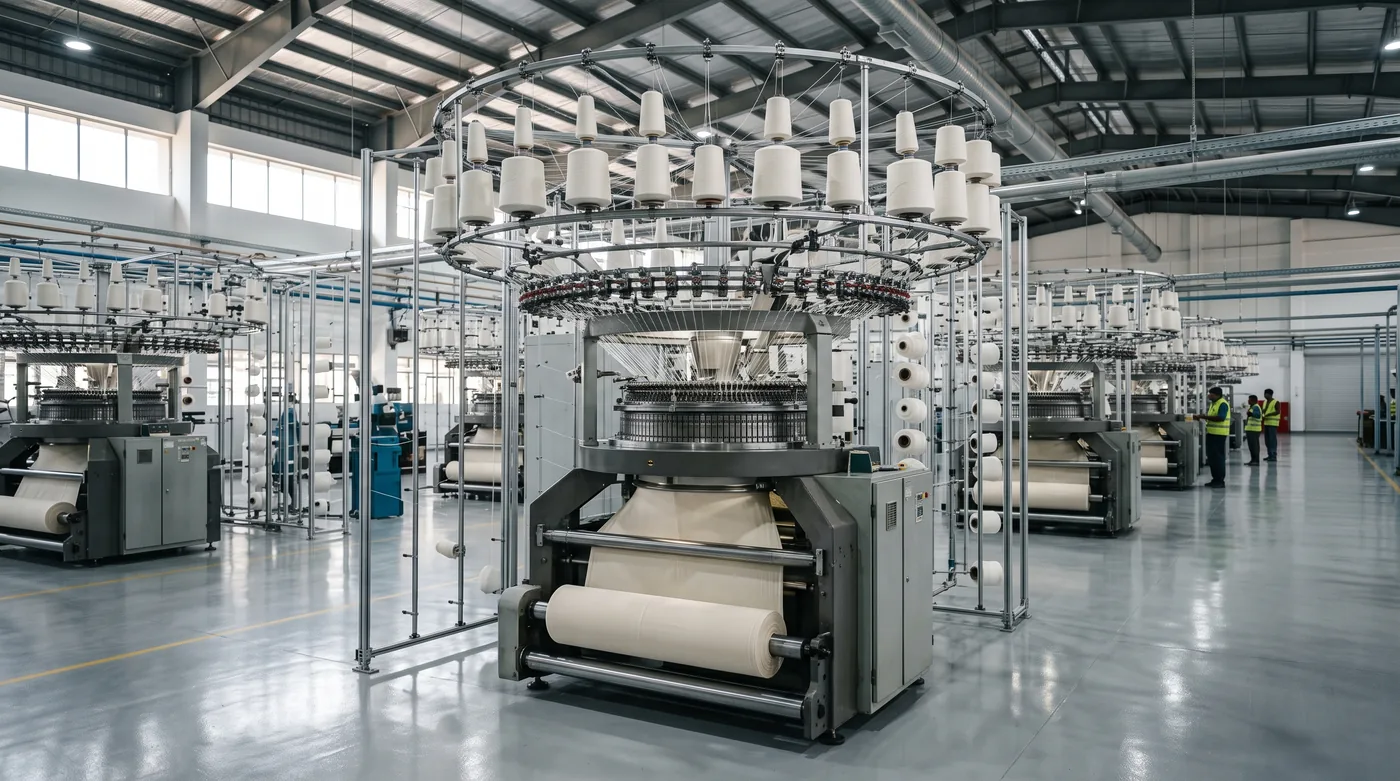
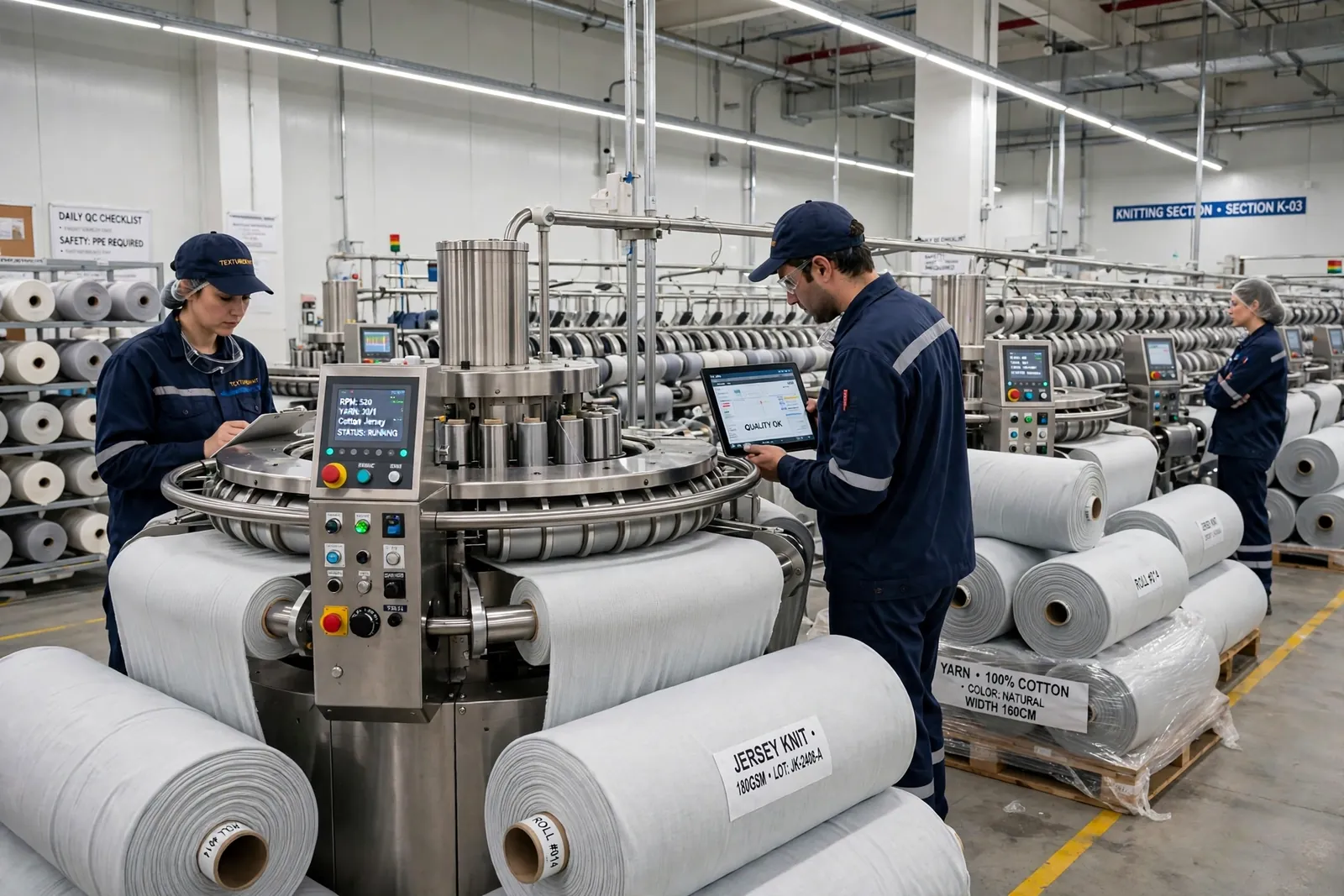
Knitting Section
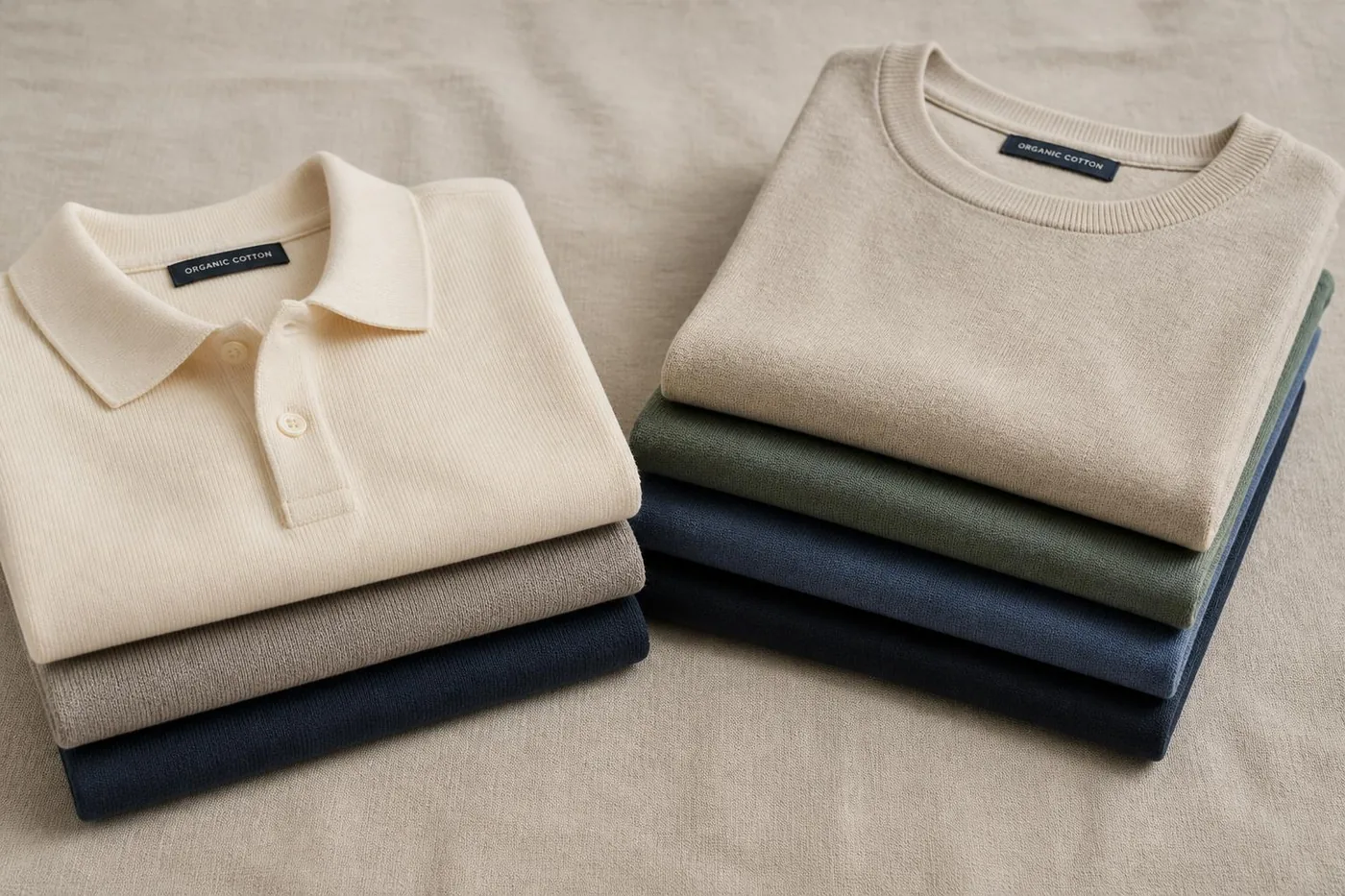
Equipped with high-precision 24G and 28G circular knitting machines handling single jersey, pique, rib, interlock, french terry, and fleece. Fabric tension and loop length are calibrated continuously at the cylinder cams rather than deferred to finishing, ensuring uniform loop geometry and batch-to-batch weight stability.
Technical Specifications & Quality Checkpoints
Verified Gate- Fukuhara & Mayer & Cie circular knitting machines (14 units: 10 Single Jersey, 4 Rib/Interlock)
- 72–96 positive yarn feeders with elastane/Lycra attachment capability
- Cylinder Gauges: 20G, 24G, 28G, 32G | Diameters: 30", 32", 34"
- Fabric types: 100% Combed Cotton, CVC, TC, French Terry, Rib 1x1 / 2x2, Heavy Interlock, Waffle
- In-line yarn tension meters and 4-point fabric roll inspection under calibrated lighting frames
- Tolerances: GSM ±3% across full roll width; Loop length variance ≤ 1.5%
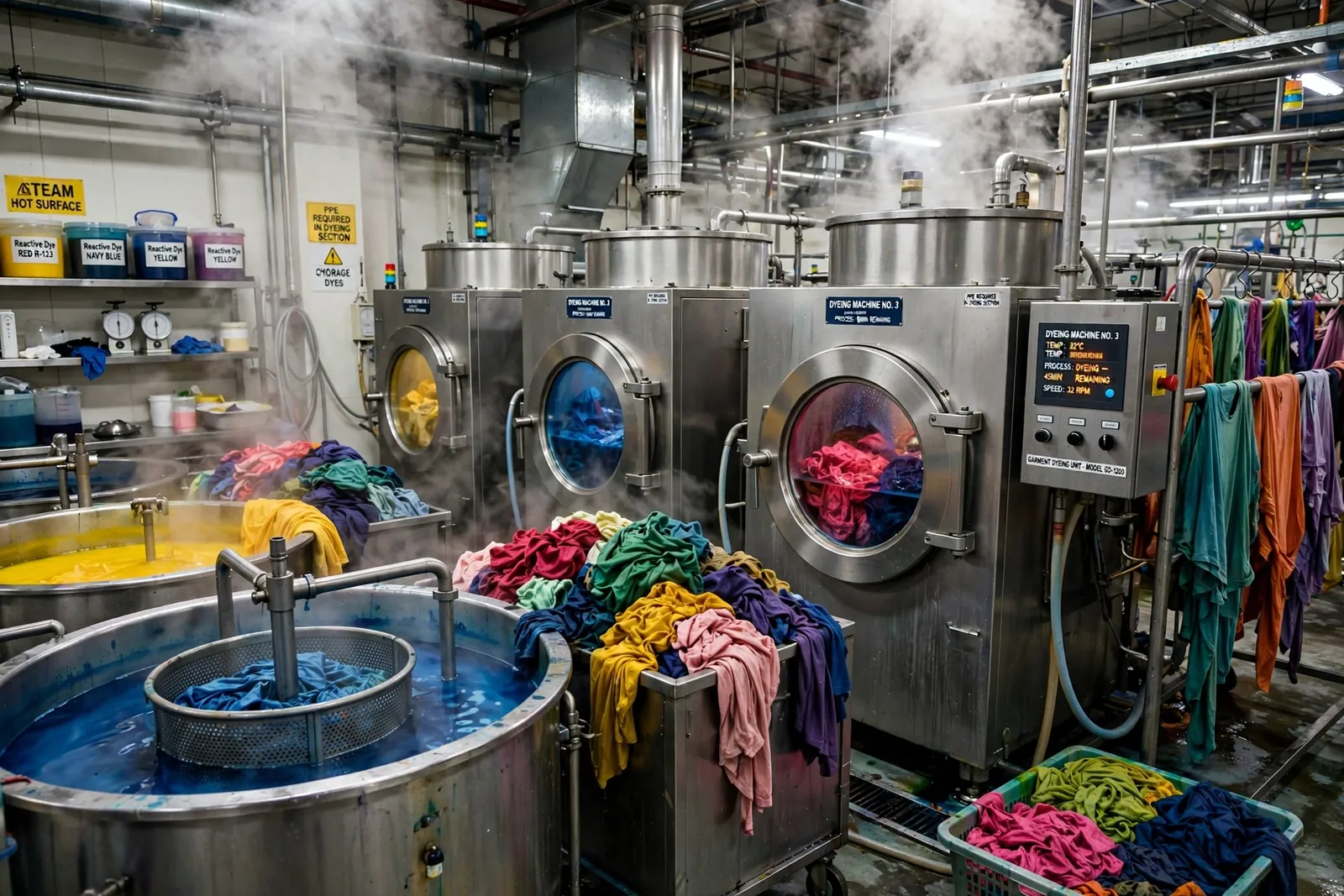
Dyeing Section
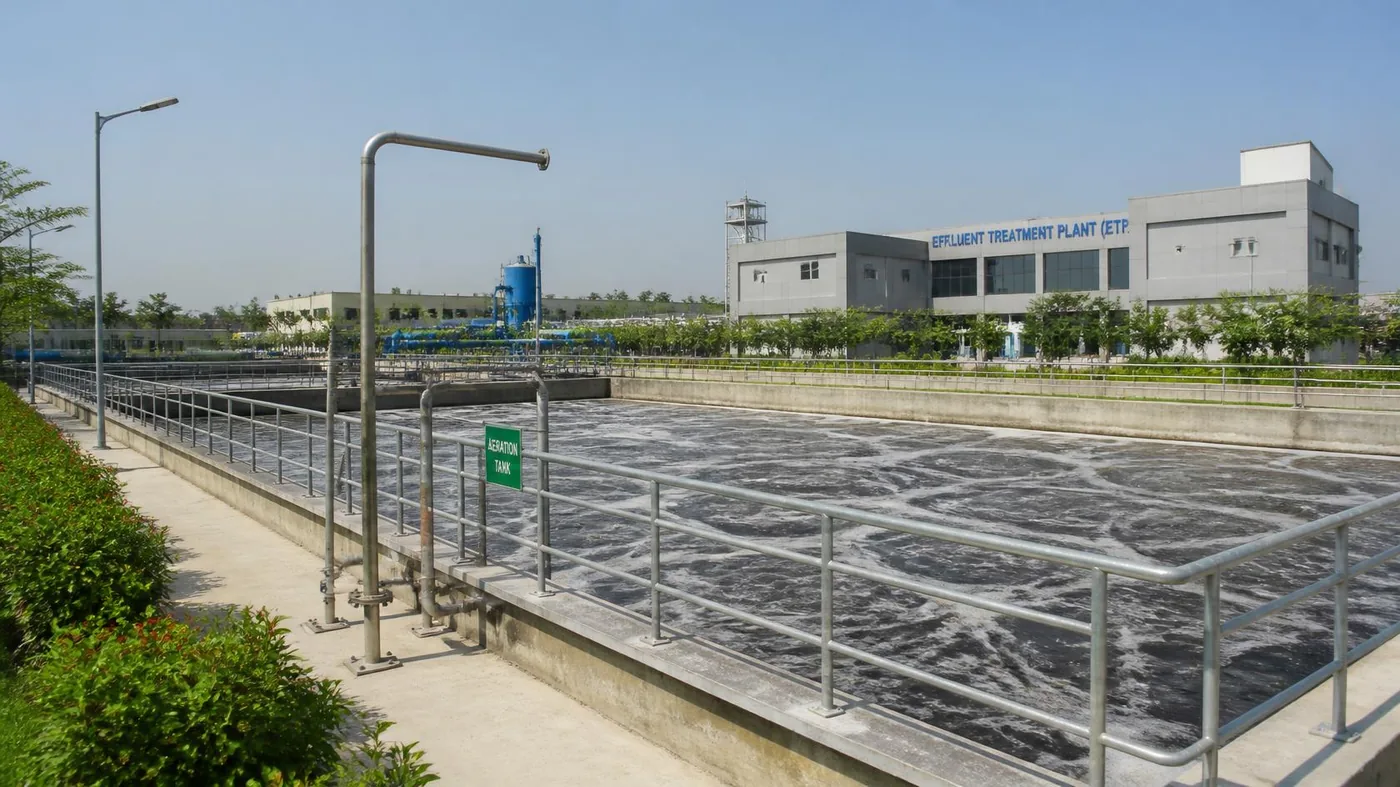
Soft-flow high-temperature dyeing vessels engineered for low-liquor ratio processing (1:5), drastically minimizing mechanical abrasion, pilling, and torque on circular knits. Supported by automated chemical dispensing, spectrophotometer recipe prediction, and an integrated biological ETP plant.
Technical Specifications & Quality Checkpoints
Verified Gate- Fong's Eco-smart low-liquor soft-flow dyeing vessels (50kg sample up to 1,500kg bulk tubes)
- Mahlo pin-stenter with moisture telemetry, Ferraro open-width compactor, Santex relax dryer
- Central computerized liquid dyestuff and salt dosing system for reproducible batch recipes
- Spectrophotometer (DataColor 650) ensuring CMC 2:1 Delta E < 0.8 against buyer pantones
- Fastness ratings: Washing ISO 105-C06 Grade 4–5; Rubbing ISO 105-X12 Dry 4.0+ / Wet 3.5+
- 24/7 dedicated biological ETP ensuring full ZDHC and environmental compliance
Cutting Section
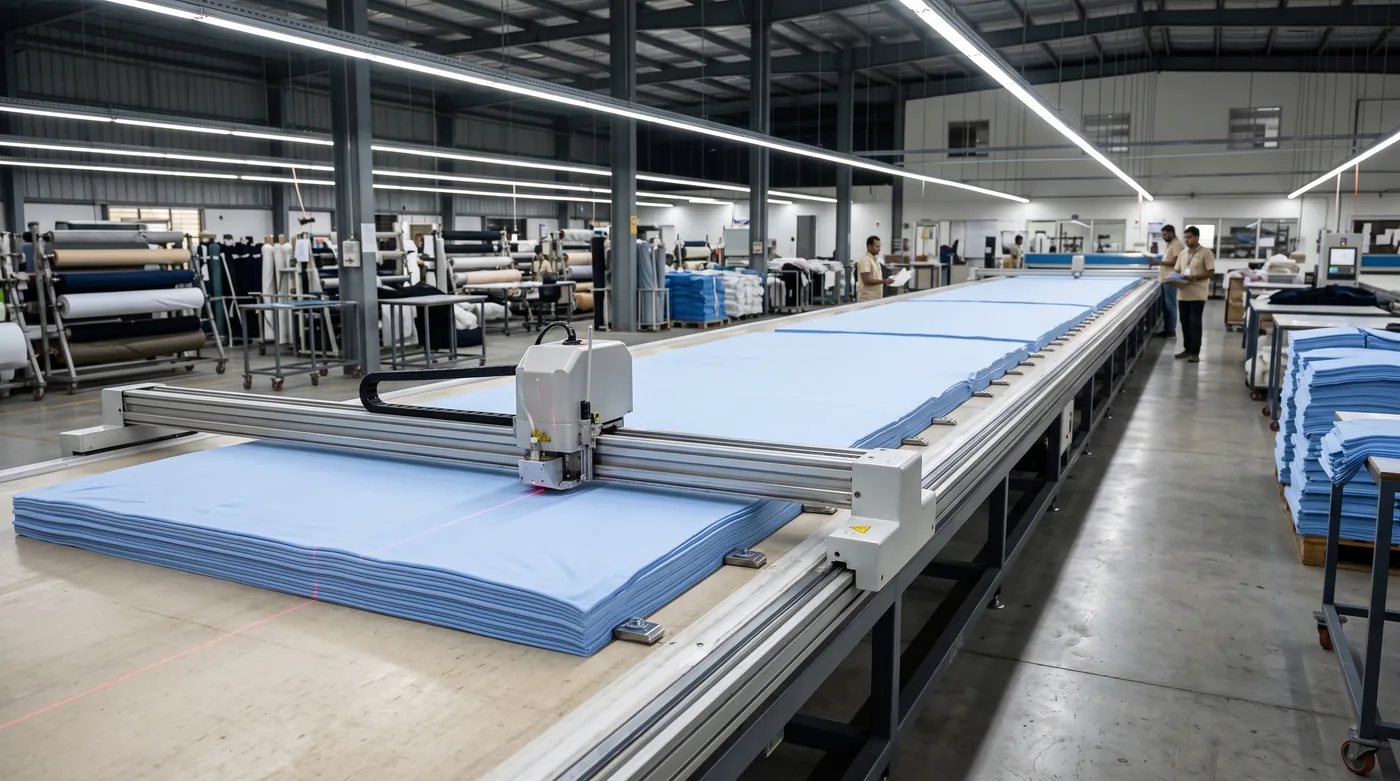
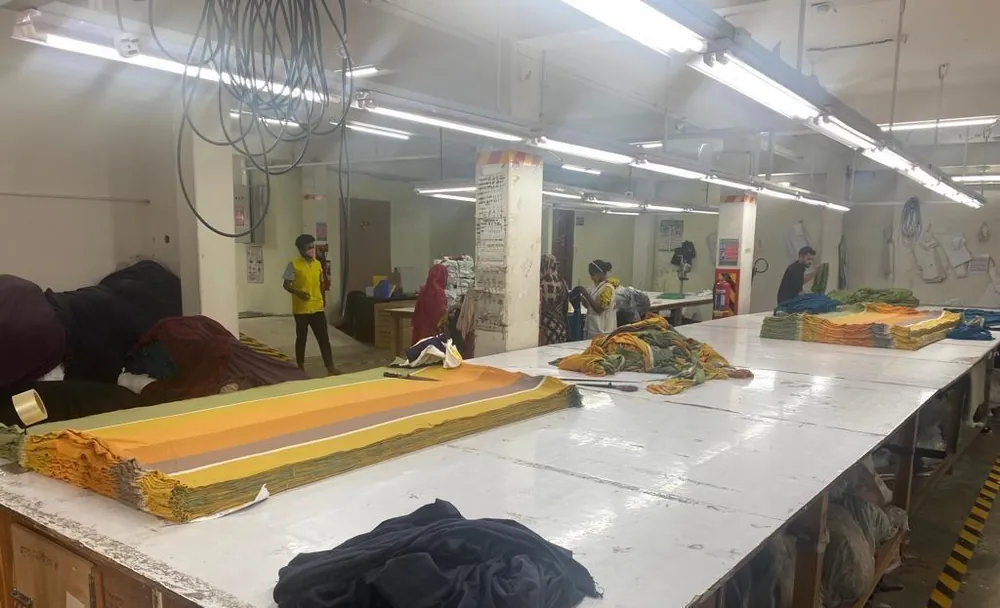
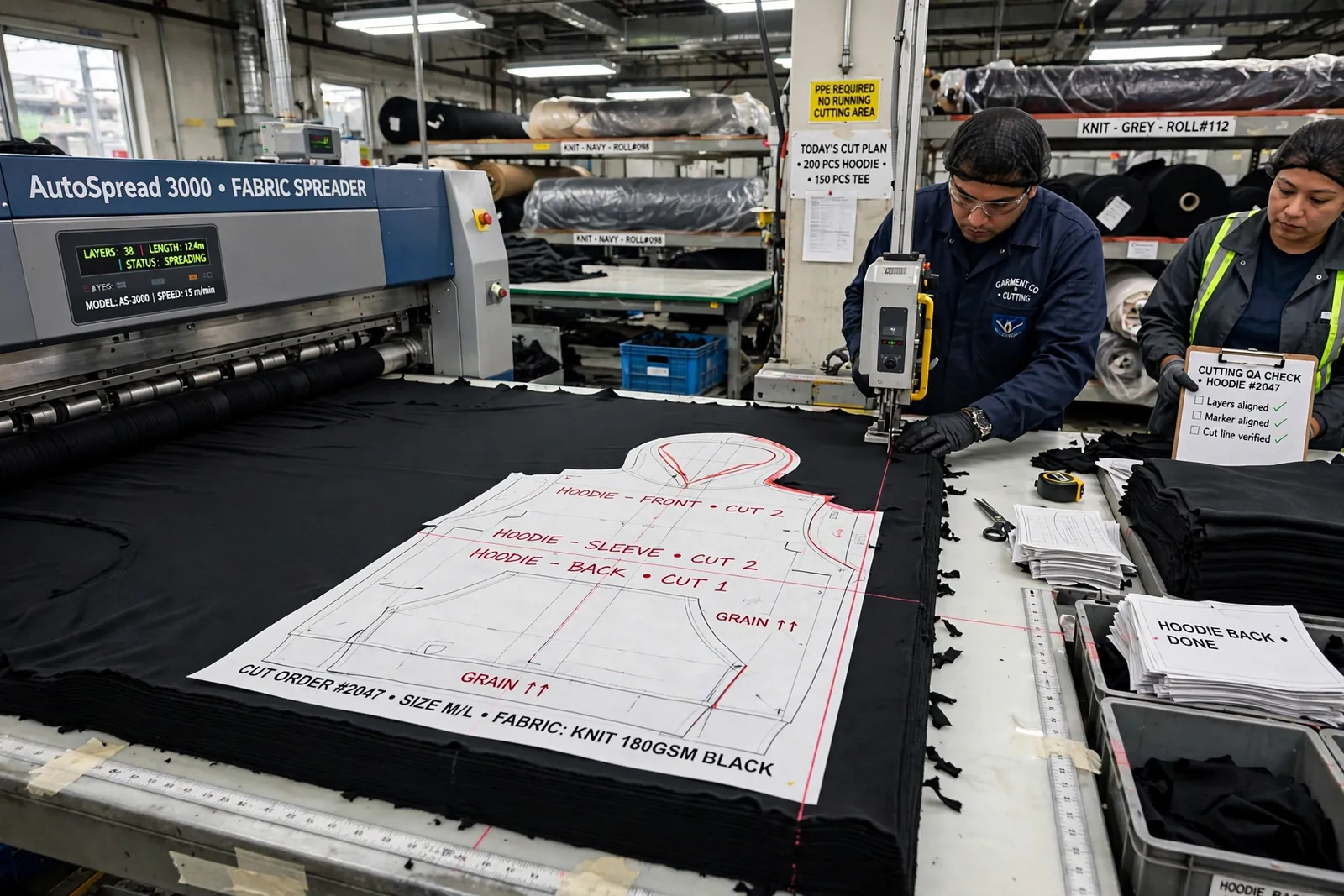
Automated tension-free fabric spreading and high-speed precision cutting systems ensure laser-accurate notch alignment and grainline consistency across high plies. Every lay undergoes strict relaxation resting and marker efficiency verification to eliminate shrinkage distortion and maximize raw material yield.
Technical Specifications & Quality Checkpoints
Verified Gate- Eastman automatic tension-free fabric spreaders and Kuris CNC servo cutters
- Gerber / Lectra CAD pattern digitizing, multi-size grading, and nesting optimization
- 80-foot vacuum-assisted air-flotation cutting tables with zone suction clamping
- Mandatory 24-hour fabric rest relaxation before lay spreading to eliminate latent tension
- Digital analytical balance (0.001g) and pneumatic GSM circular disc cutter
- Tolerances: ±0.5 mm cutline accuracy; 100% ply-to-ply shade numbering against roll shading
Sewing Section
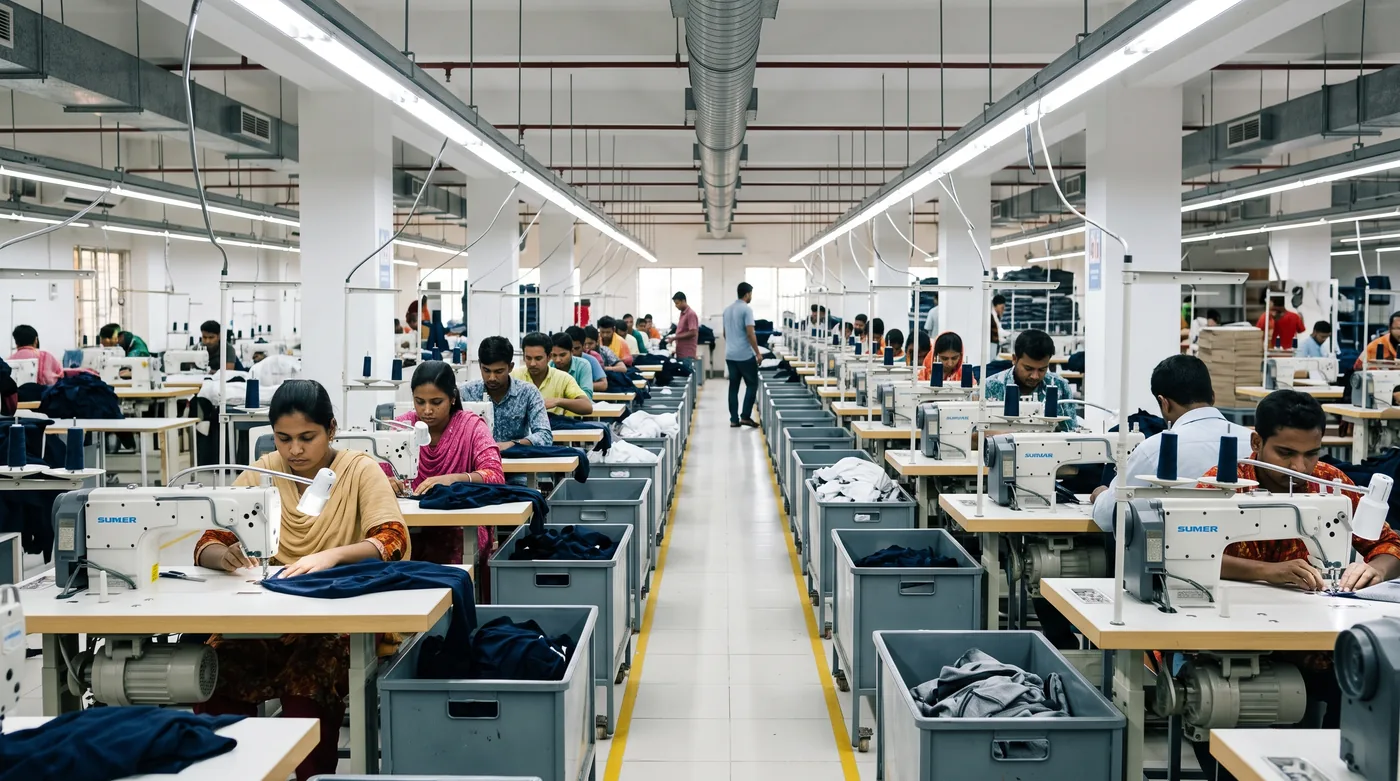
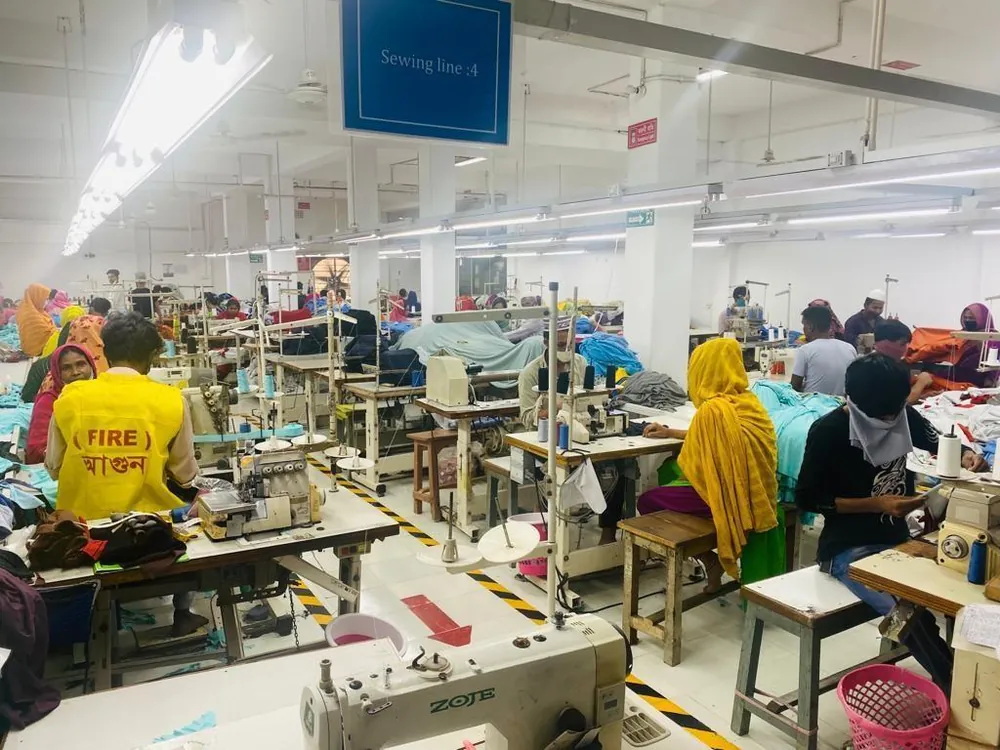
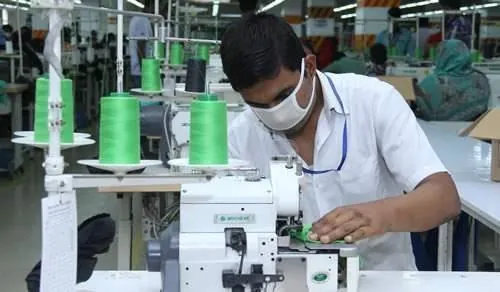
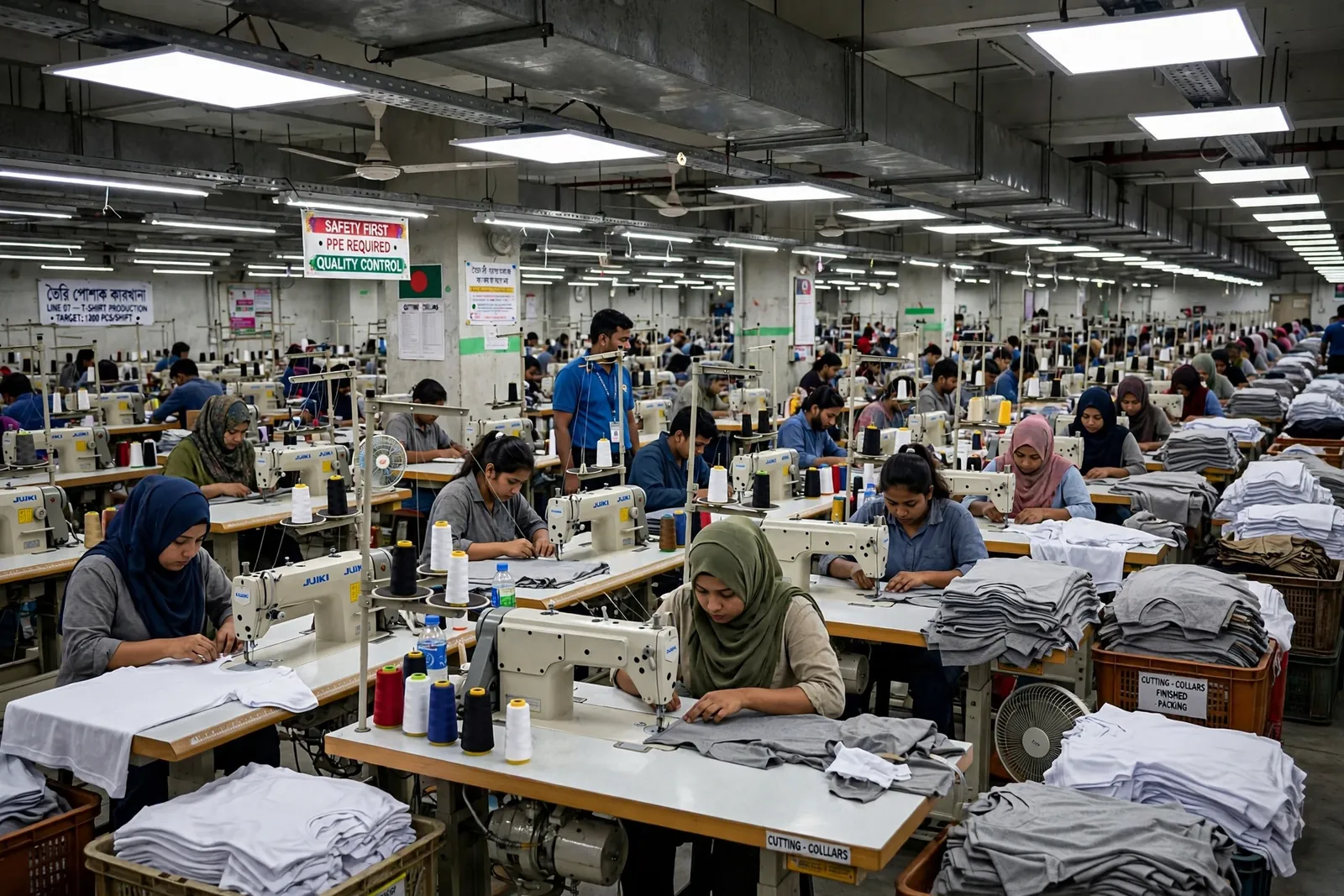
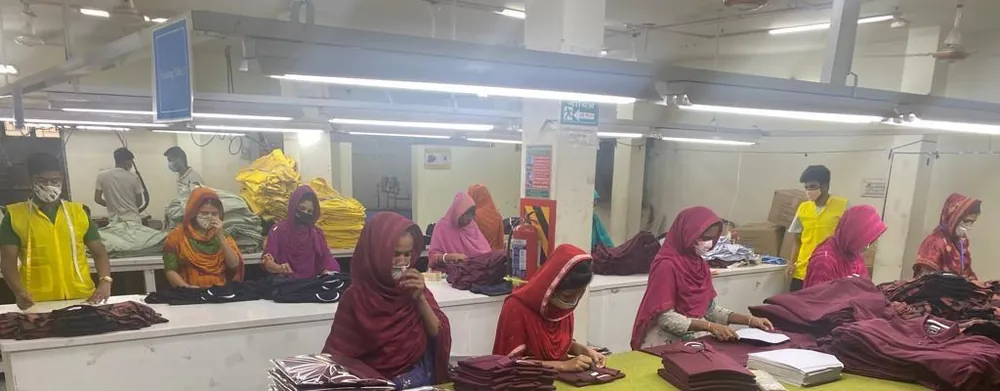
Eight high-speed modular assembly lines staffed by 340+ certified operators and supervisors. Each workstation utilizes direct-drive Japanese machinery with specialized attachments for knitwear seams, reinforced bar tacks, collar ribs, and ergonomic flatlock styling.
Technical Specifications & Quality Checkpoints
Verified Gate- 154 specialized sewing machines (Juki DDL direct-drive lockstitch, MO overlock 4/5-thread, MF flatlock)
- Brother electronic eyelet & buttonhole, Kansai Special multi-needle waistband units
- 8 dedicated lines (4 Polo lines, 4 T-shirt / Fleece lines) with synchronized progressive bundle flow
- Calibrated stitch density: 10–14 Stitches Per Inch (SPI) strictly verified per fabric weight
- Pull-test certification: Snap buttons and eyelets sustained ≥ 90N pull test for 10 seconds
- Strict broken needle SOP: 100% fragments accounted and recorded in quarantine log
Finishing Section
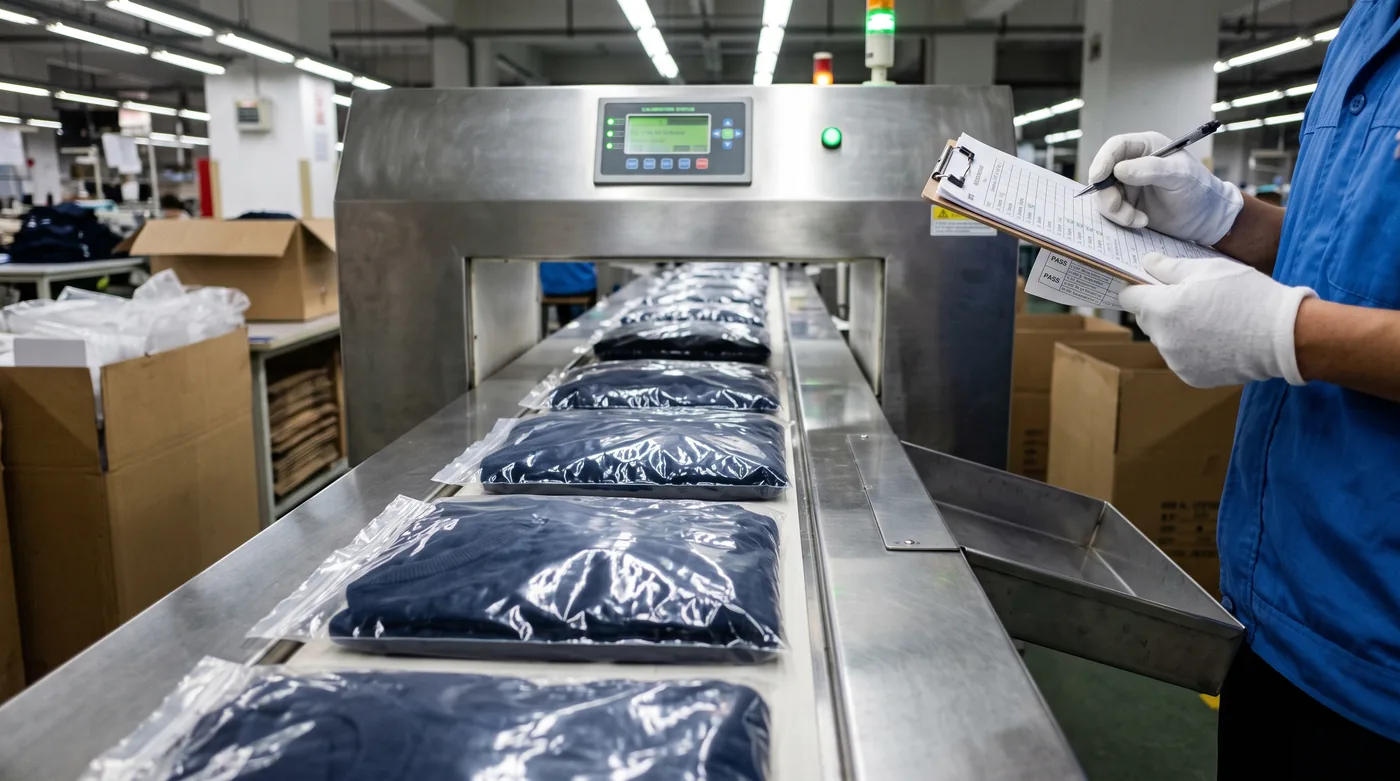
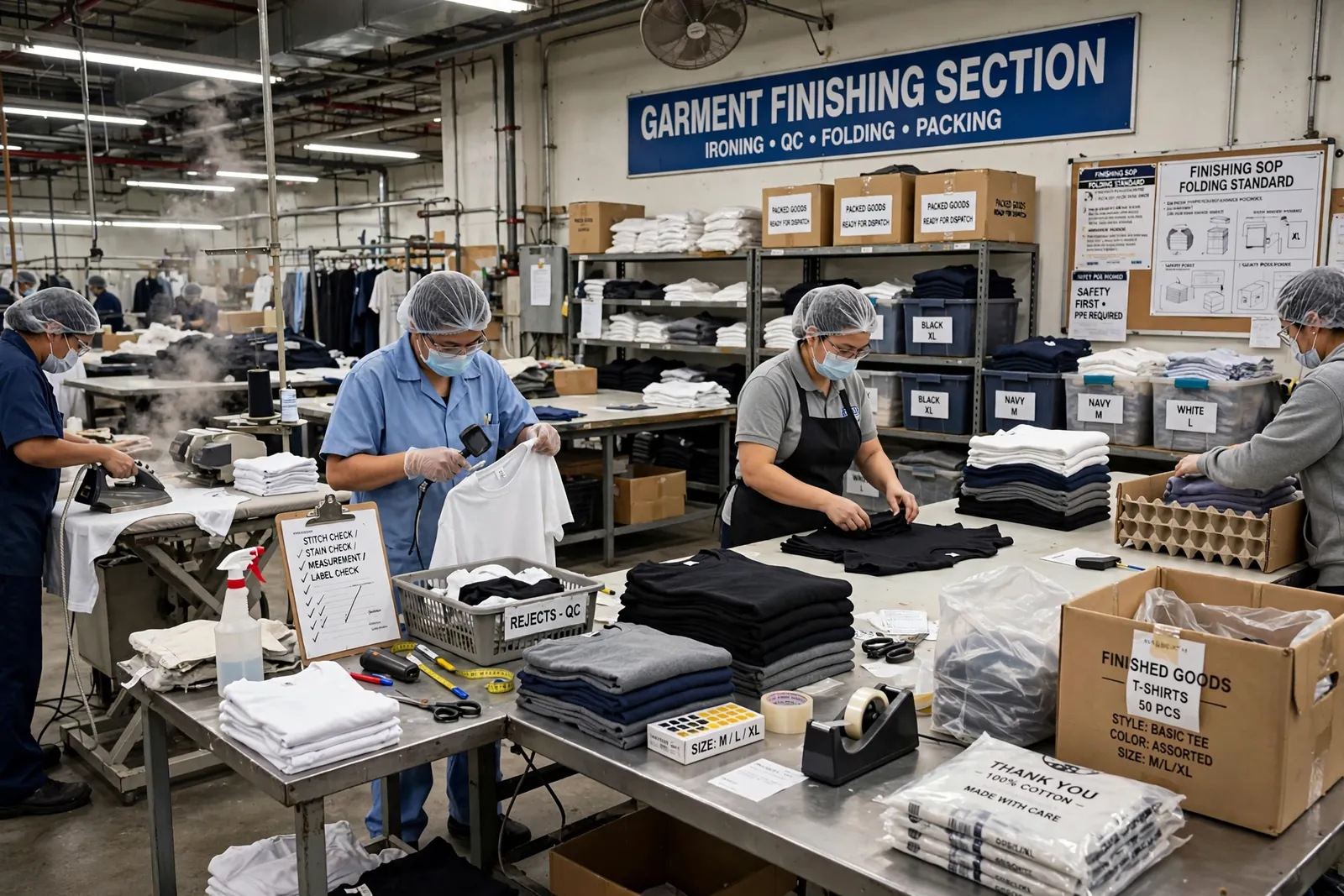
End-of-line finishing engineered to preserve knit loft and texture without fabric flattening or scorch marks. High-volume industrial vacuum tables with dry micro-steam pressing prepare garments for final dimensional auditing, barcode labeling, polybagging, and 100% conveyorized needle detection.
Technical Specifications & Quality Checkpoints
Verified Gate- Naomoto & Silver Star industrial vacuum iron tables with dry-steam generators and bottom suction
- Automatic electric steam boiler with automated pressure regulation and clean steam delivery
- Hashima HN-880C continuous conveyorized dual-head needle detector (1.0mm Fe / 1.2mm Non-Fe)
- Post-pressing dimensional audit checking 12 critical spec points against buyer grading specs (±0.5 cm)
- Conditioned moisture control (6%–8% relative regain) prior to individual polybag sealing
- Final statistical AQL 1.5 audit before master carton sealing and strapping
Printing Section
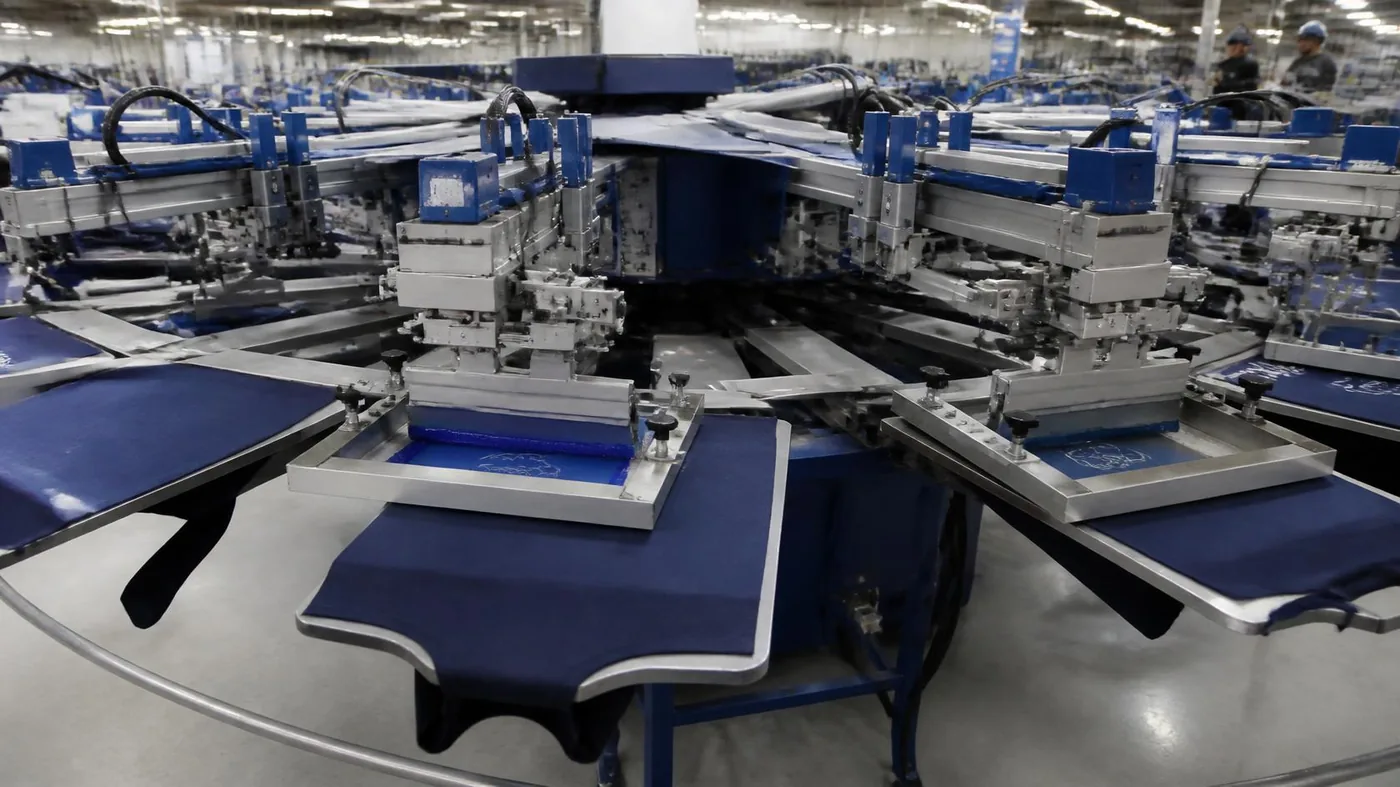
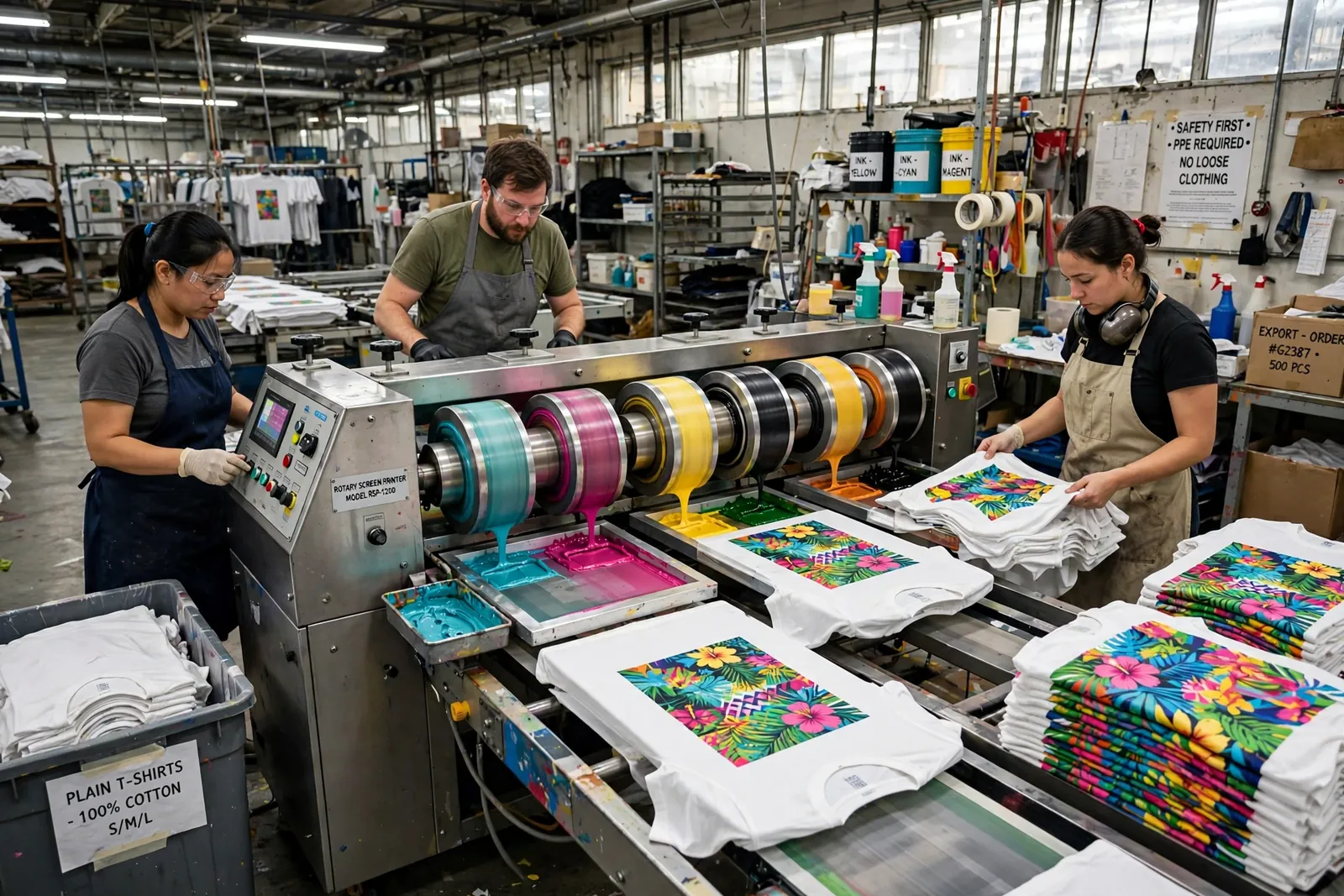
In-house automated screen printing facility supporting up to 8-color registered artwork on cut panels and finished garments. Equipped with precision squeegee pressure control, infrared flash cures, and continuous tunnel dryers ensuring vibrant color brilliance, sharp edge definition, and crack-free wash resistance.
Technical Specifications & Quality Checkpoints
Verified Gate- Automatic oval screen printing carousels and 12-station manual strike-off sampling tables
- Computer-to-screen (CTS) exposure unit and pneumatic mesh stretching frames (22–25 N/cm tension)
- Multi-zone precision forced-hot-air tunnel dryer with infrared pyrometer thermal profiling
- Ink systems: Eco-friendly water-based, non-PVC plastisol, discharge, rubber, 3D high-density, glitter, and puff
- Screen registration tolerance: ≤ 0.3 mm across all color separations
- Wash durability: Minimum 25 home launderings at 40°C without cracking, peeling, or fading
Embroidery Section
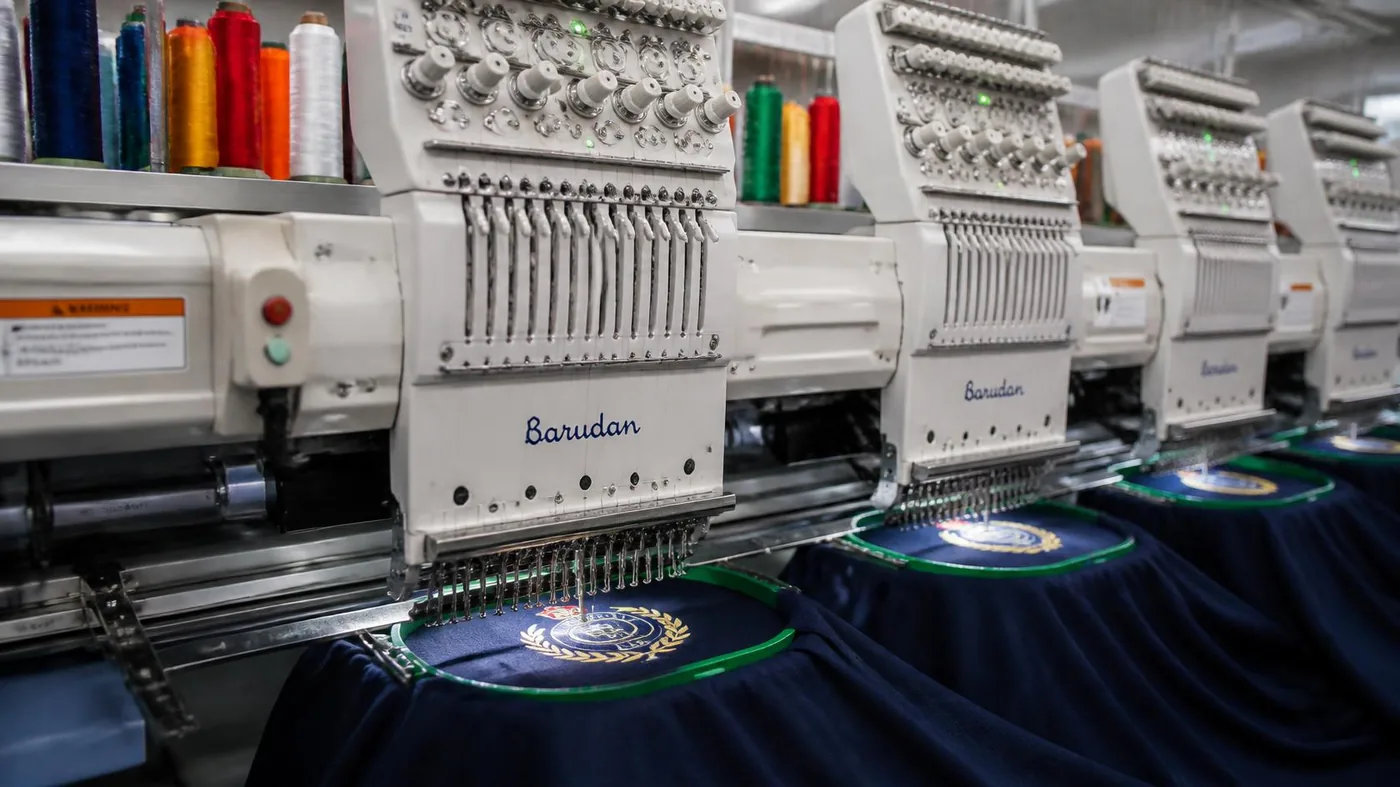
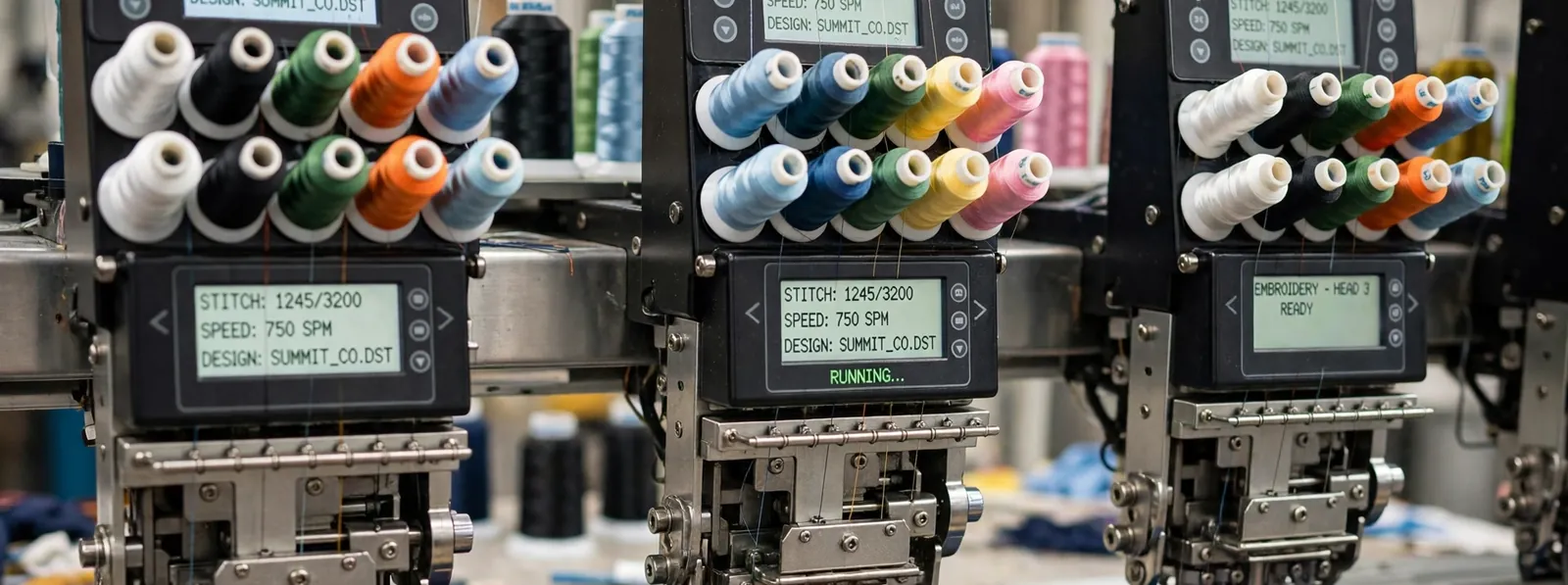
High-speed multi-head computerized embroidery division running multi-needle Tajima machines. Backed by an in-house Wilcom digitizing studio, we deliver high-density corporate insignias, 3D puff embroidery, appliqués, and tonal badges with crisp contour accuracy and zero puckering on lightweight knits.
Technical Specifications & Quality Checkpoints
Verified Gate- Tajima multi-head industrial embroidery machines (12-needle and 15-needle configurations)
- In-house licensed Wilcom EmbroideryStudio digitizing CAD with stitch path simulation
- Tubular frames for chest crests, flat border frames for large front graphics, and structured cap frames
- High-tenacity 100% trilobal polyester embroidery threads with OEKO-TEX certification
- Operating speed: 850–1,000 stitches per minute with dynamic automatic thread tensioners
- Positioning accuracy: ±0.5 mm placement precision with laser crosshair registration
Production Capacity by Product — 35,000 Pcs/Day Peak.
Actual line outputs depend on fabric weight, placket structure, and decorative embroidery. Capacities are logged from our daily production schedule.
Depends on style
Depends on style
Depends on style
Standard export line
Standard export line
8 lines
AQL 1.5
Standard export line
Standard export line
Standard export line
Standard export line
Facility Machinery Inventory — 308 Active Production Units.
Full breakdown of factory capital equipment across cutting, 8-line sewing, finishing, in-house utility, and QC measurement.
Workstation Precision — Cut, Sew & Finish.
Cutting.
Automatic spreading lays the plies; the marker is checked before a single blade passes the table. A digital weight scale confirms the GSM the buyer specified, and a dedicated GSM cutter cuts to it. Marker check is a QC gate, not a formality — fabric wastage is one of the two biggest cost drivers in a knit programme.
Sewing.
The sewing section is 154 machines and covers the full range of knit, top and bottom production: plain and overlock for joining, flatlock for stretch seams, fit-of-the-arm for knitwear shoulders, button hole, snap button, rib cutting, bar tuck, spot cleaning, eyelet and button sewing.
Finishing and packing.
A steam boiler with electric burner drives the pressing line; more than three units of vacuum iron table and suction handle knitwear without flattening the loft. Trimming, ironing, measurement check and packing are separate steps in the sequence, and the measurement check happens after pressing, because pressing changes the dimensions.
Power and continuity.
The facility runs a standby power generator and a top-grade electrical system. All equipment is compliant with safety standards, which prevents breakdowns taking a production line down mid-programme.
Workplace Safety Standards & Building Compliance.
- Abundant water supply
- Hygienic environment
- Sufficient lighting
- Top-notch ventilation system
- Clean and safety system
- Two separate staircases for emergency egress
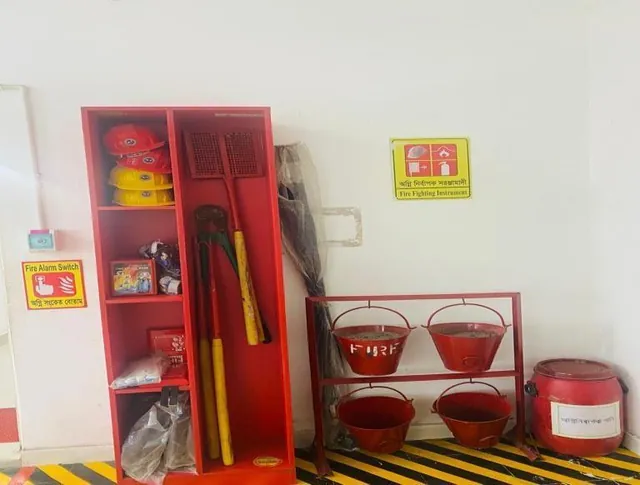
- Fire service clearance, with fire equipment and emergency signage across the floor
Ready to start a production run?
Send us your specification, target quantity and delivery date. Our export sales desk replies within 12 hours.